This section brings together selected critical writings on Simon Berger’s work. Essays by art historians, curators, and critics examine the material, conceptual, and perceptual dimensions of his glass practice, situating it within broader art-historical and theoretical contexts.
Glass Spaces
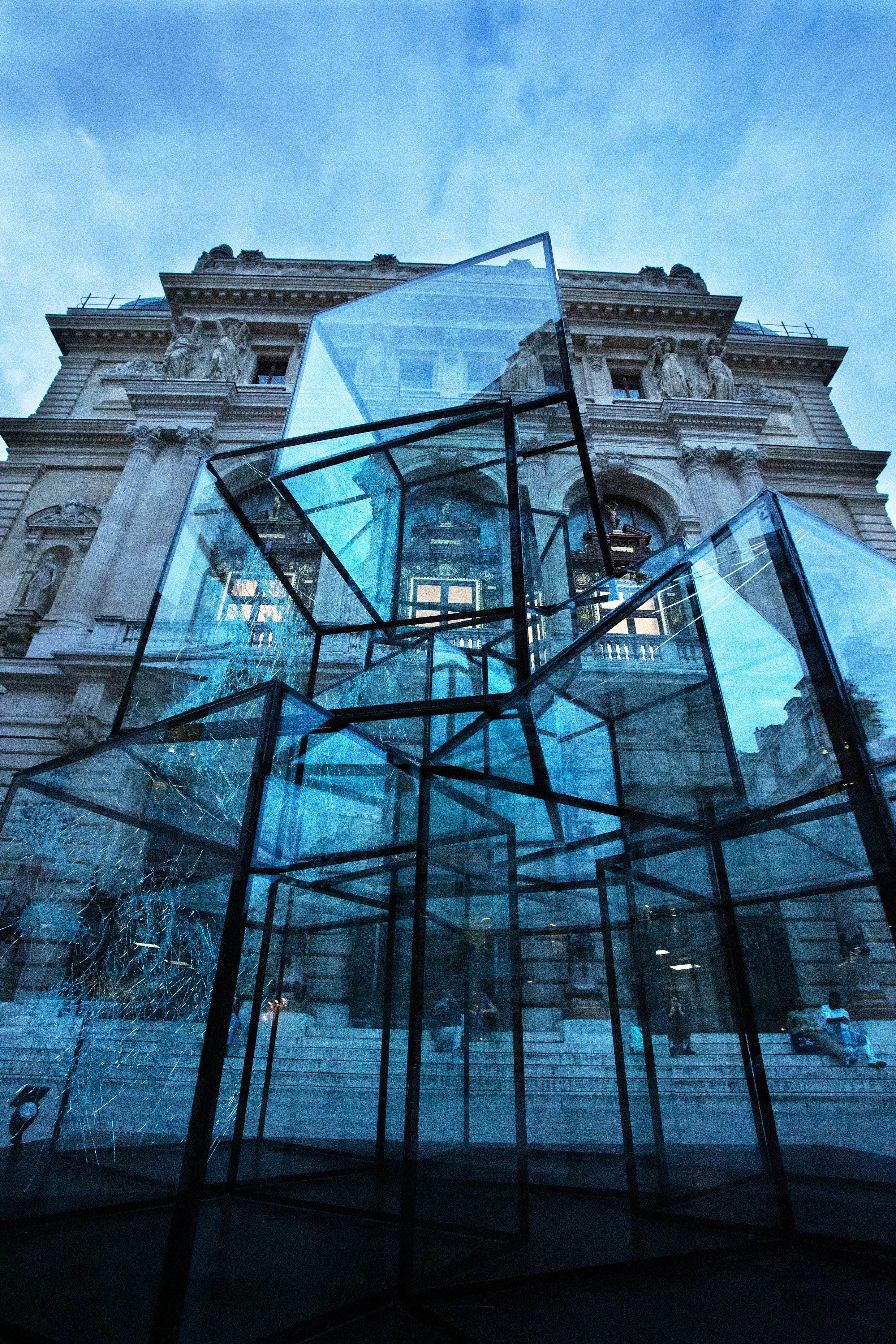
In Glass Spaces, Stéphane Corréard explores Simon Berger’s singular practice of drawing within glass through controlled hammer strikes, where light — not pigment — becomes the true medium. Moving between material and immaterial, chance and mastery, Berger’s cracked surfaces transform impact points into luminous lines that reveal faces emerging from refraction itself. Positioned in dialogue with Duchamp and modern artistic thought, Berger’s work expands from intimate glass panels to architectural scale, turning urban space into a field of human light.

Courteous Wrecker
In Courteous Wrecker, Prof. Pasquale Lettieri reflects on the performative and sensorial force of Simon Berger’s practice, where the shattered surface becomes a site of both rupture and revelation. Berger’s hammer blows reconfigure figuration through unorthodox geometries, transforming destruction into a sublime spatial experience in which the visible continuously slips into the invisible. Positioned between material and immaterial, memory and originality, his works invite viewers to confront the fractured mirror of contemporary existence — and to recognise themselves within it.
Can the force of destruction ever be an act of creation?
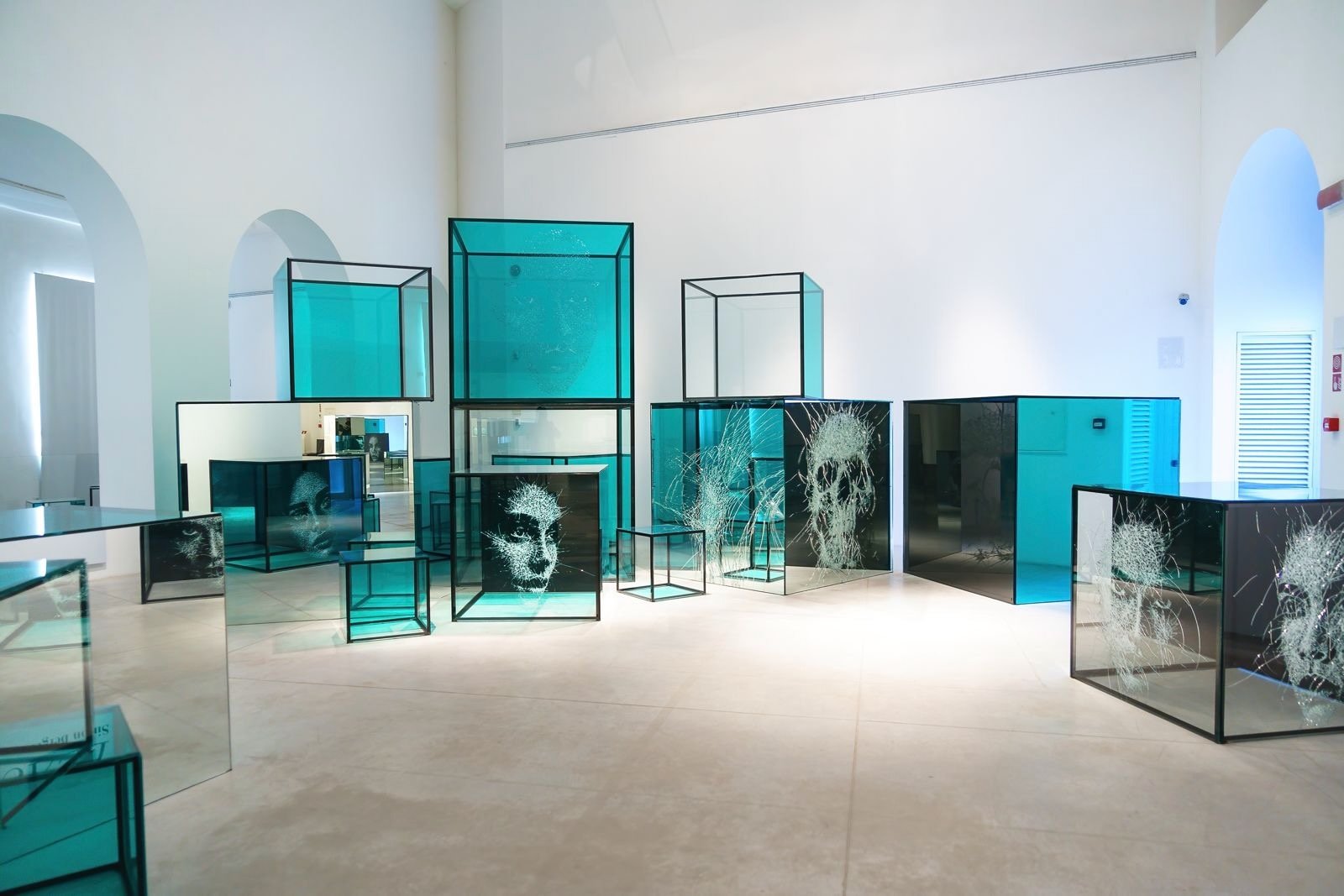
Can destruction become creation? Sandrine Welte reflects on Simon Berger’s radical reversal of artistic tradition, where the hammer replaces the brush and glass becomes both canvas and sculptural ground. Through controlled rupture and luminous fracture, Berger transforms breakage into portraiture, challenging conventional modes of seeing and redefining painting and sculpture as a single, dynamic act of “painted sculpture” and “sculpted painting.”