PROCESS
Process
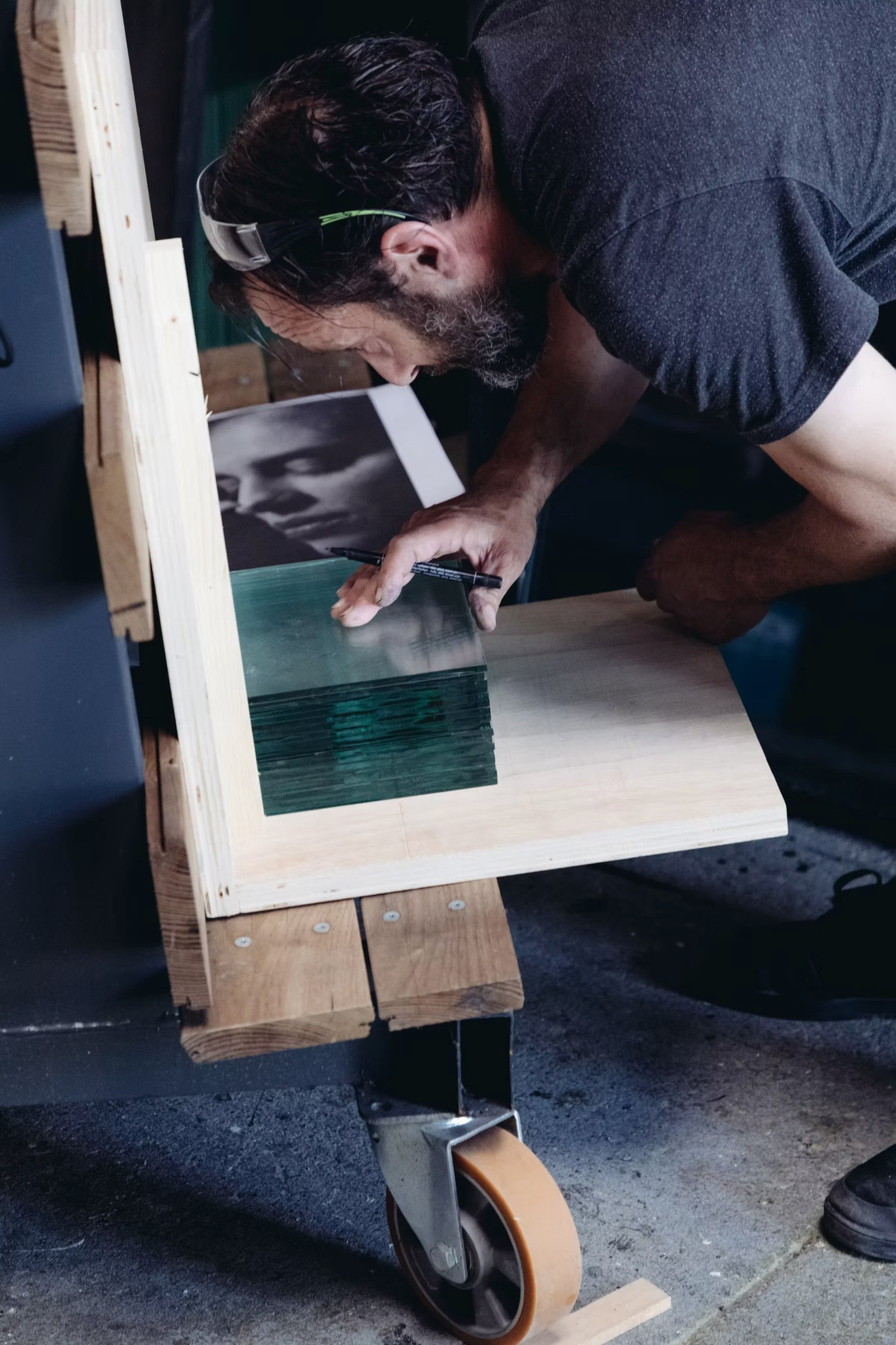
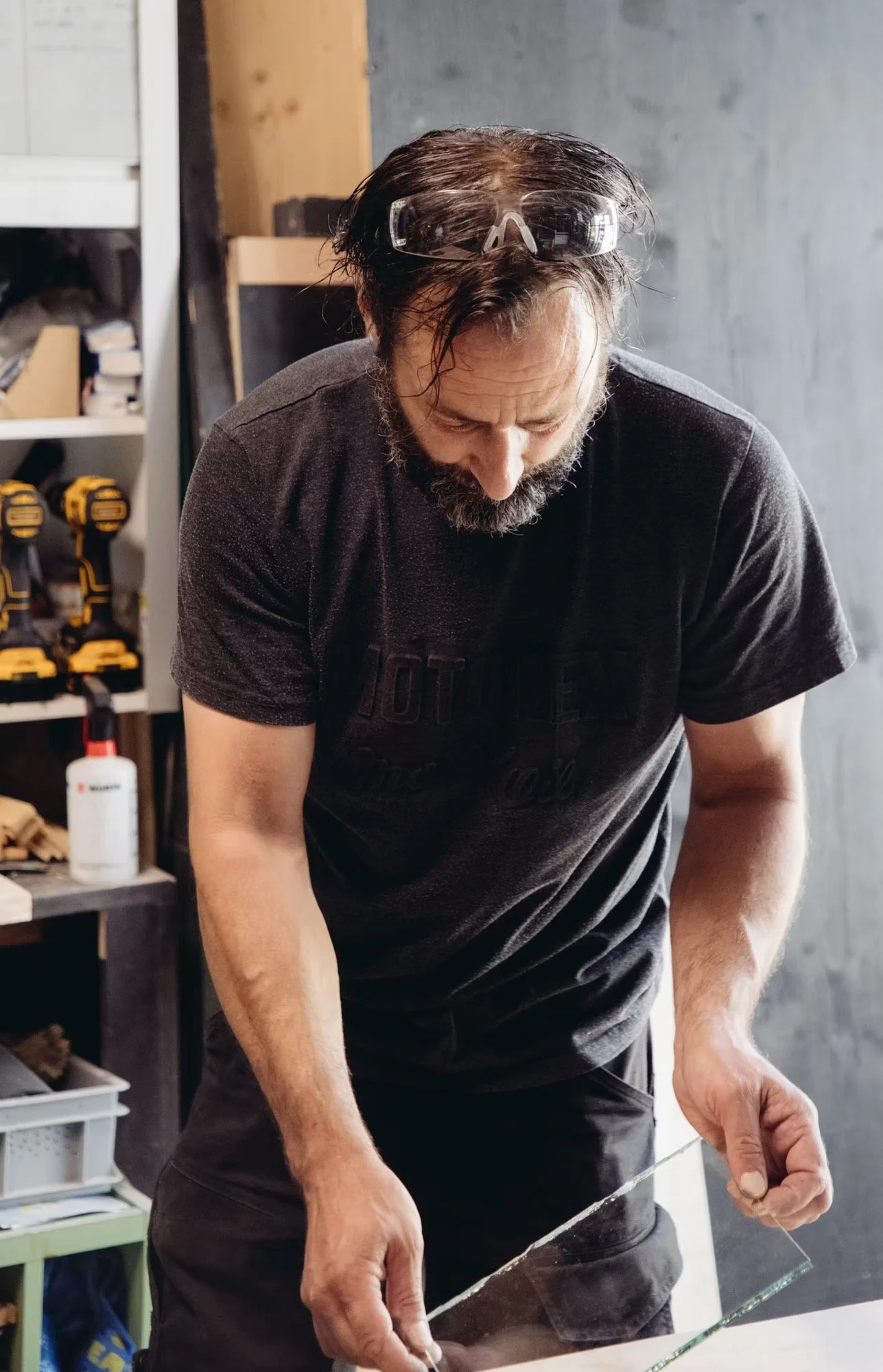
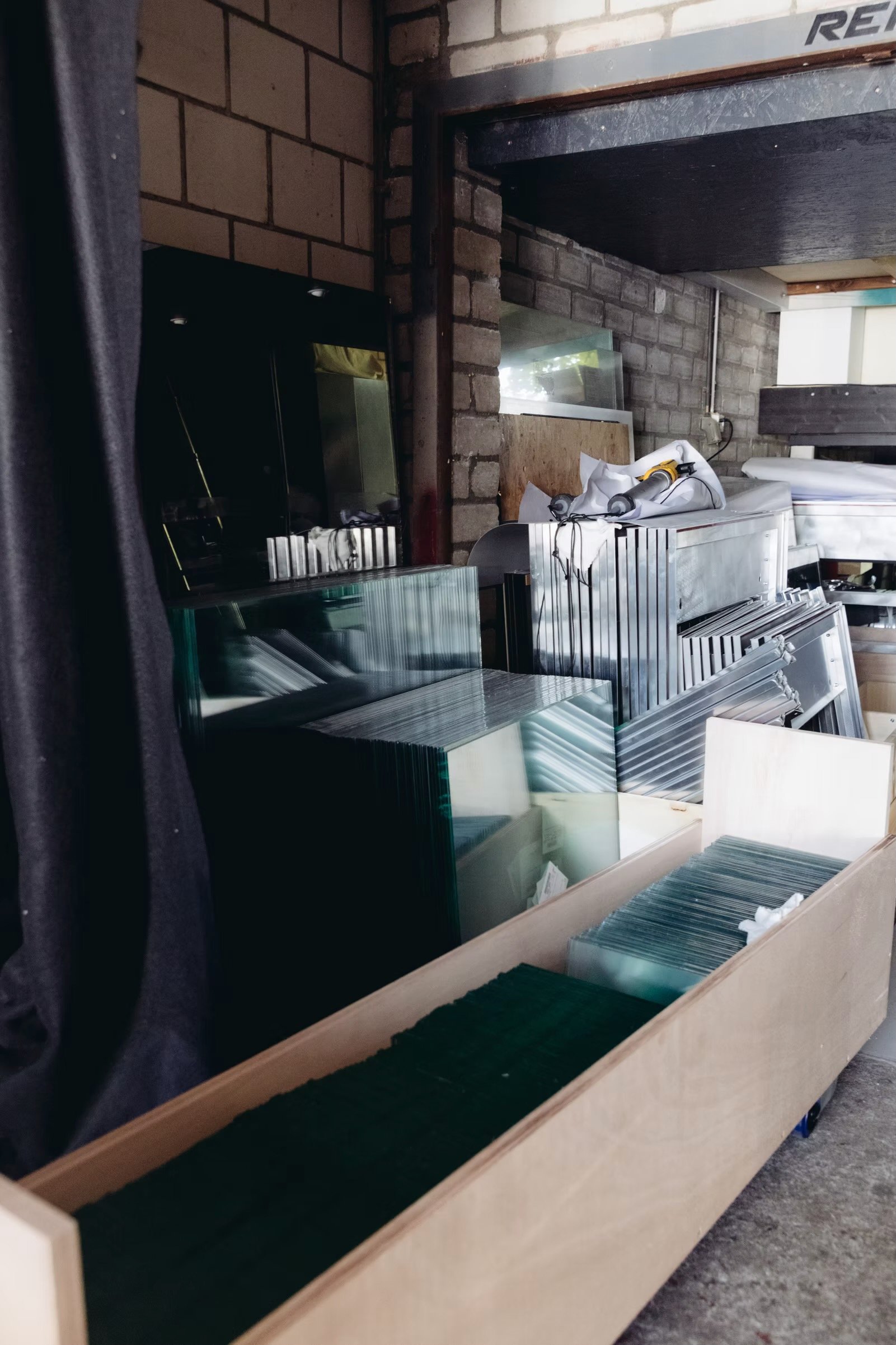
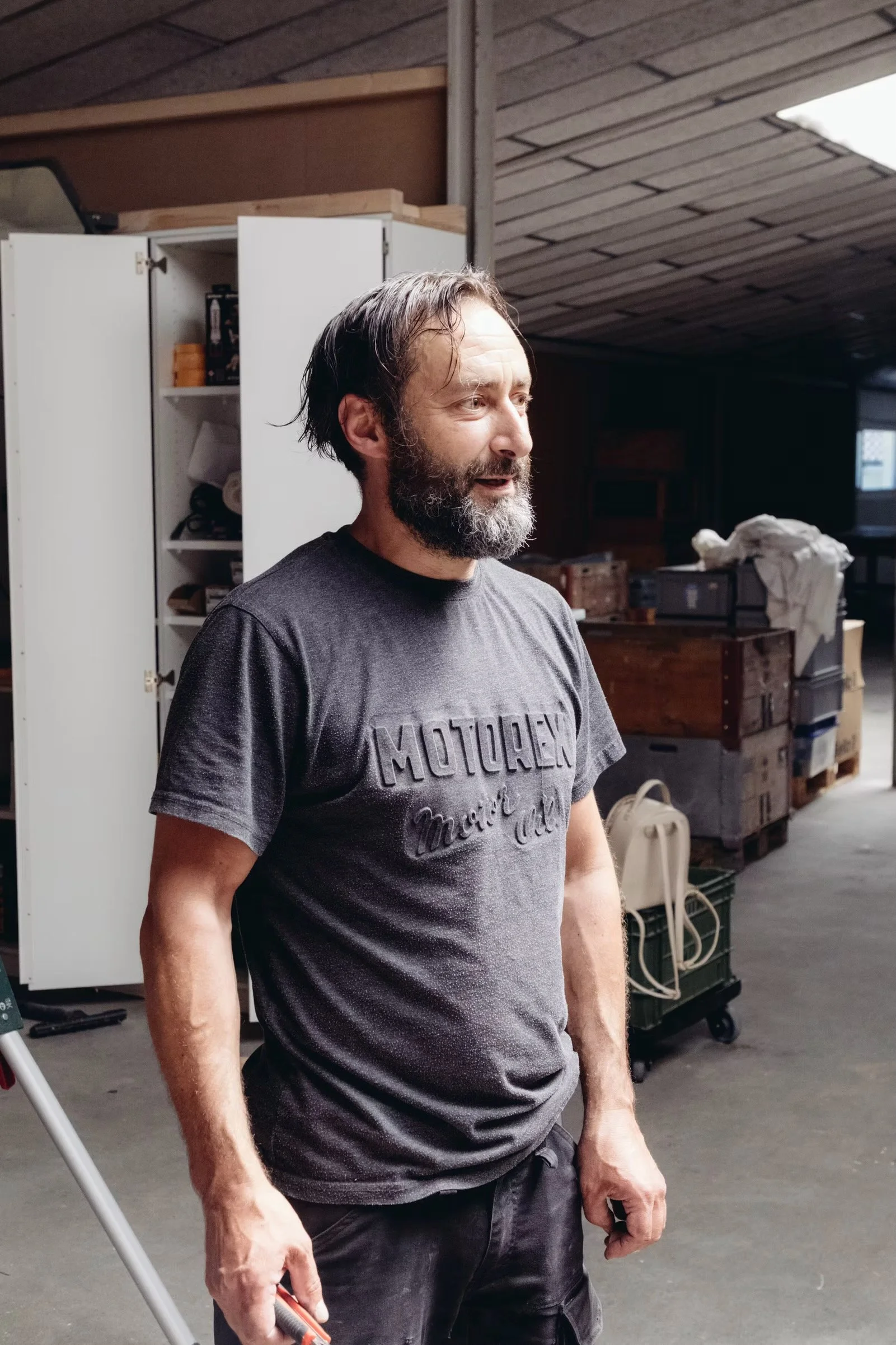
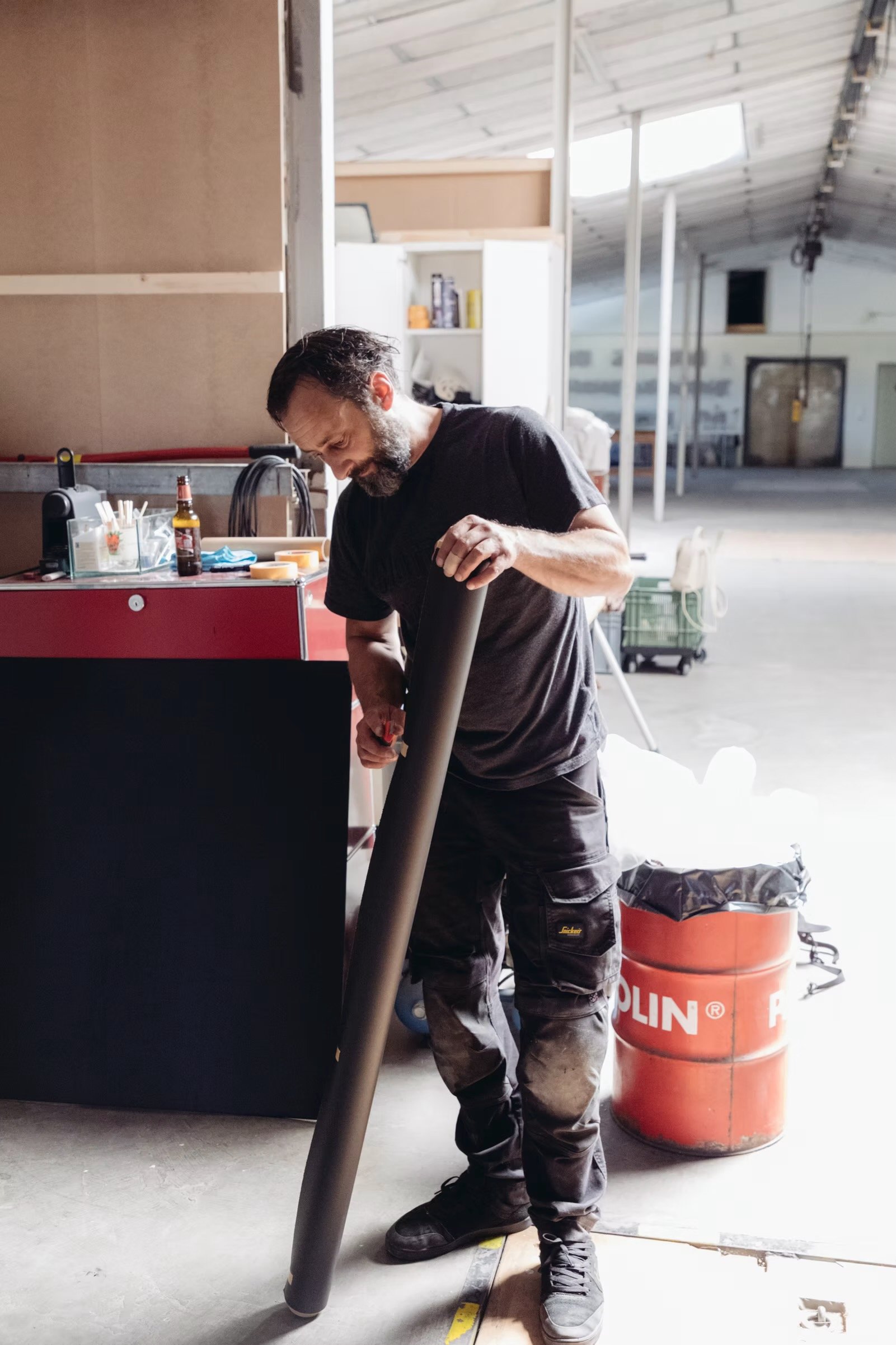
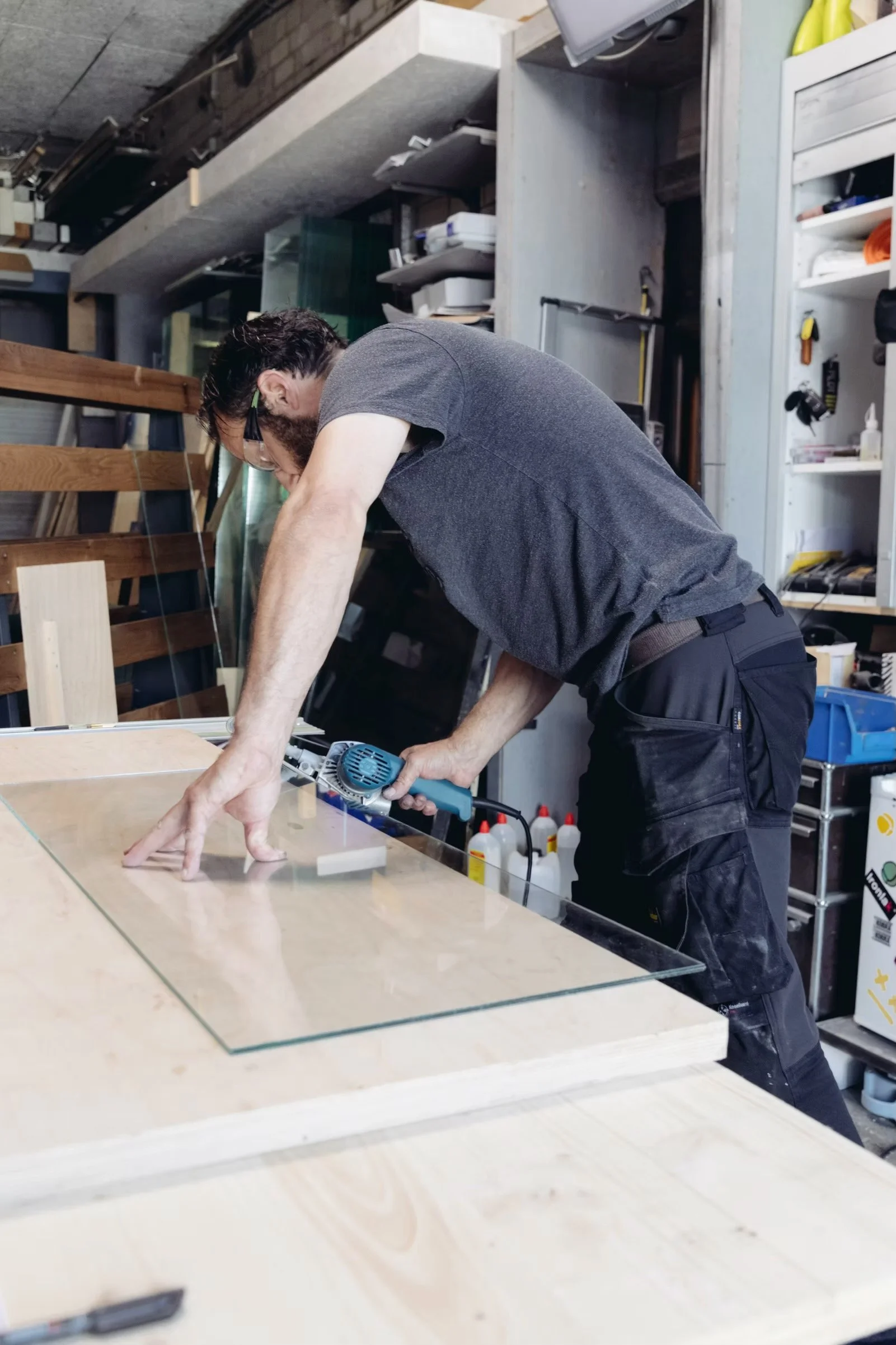
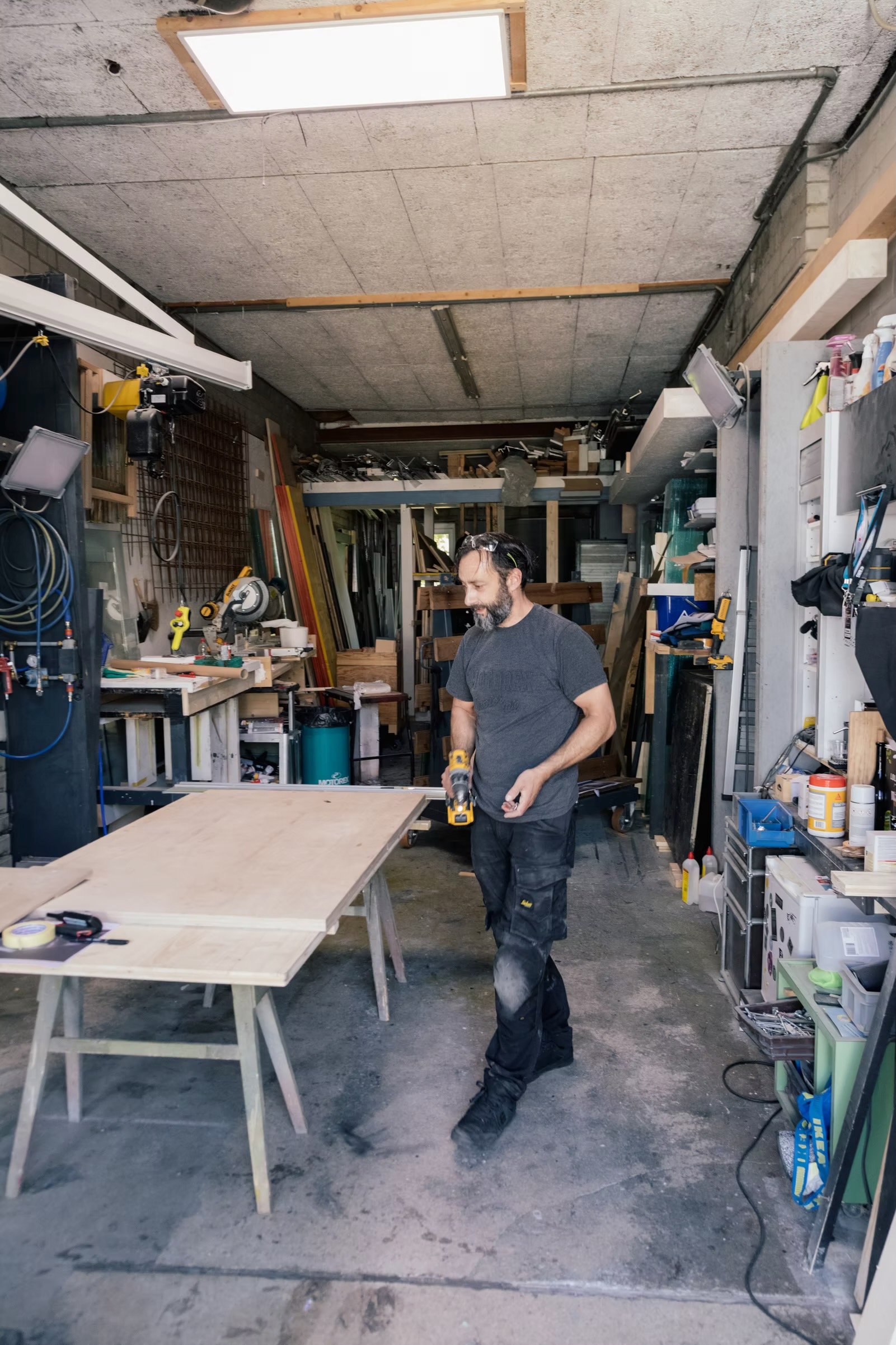
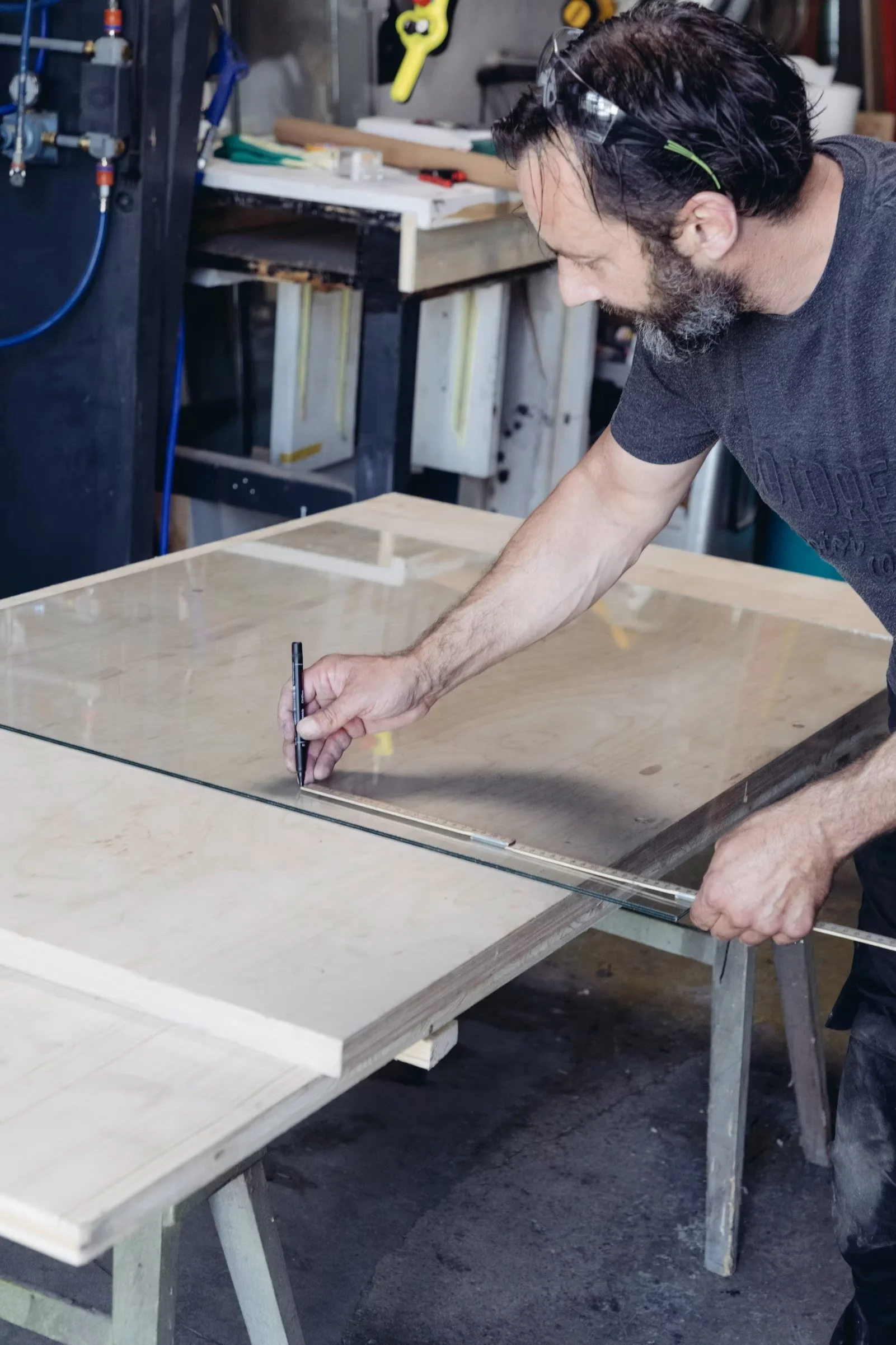
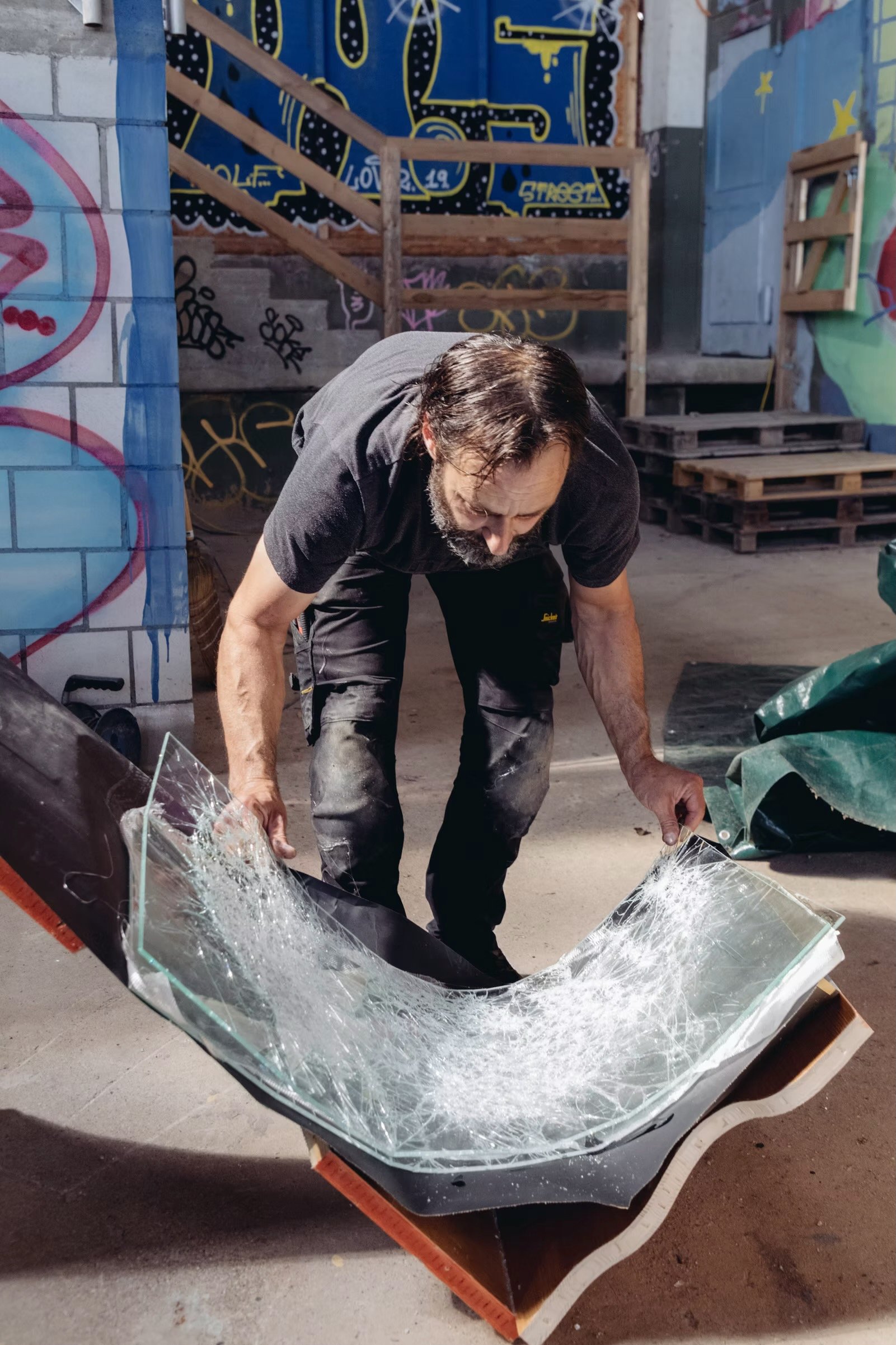
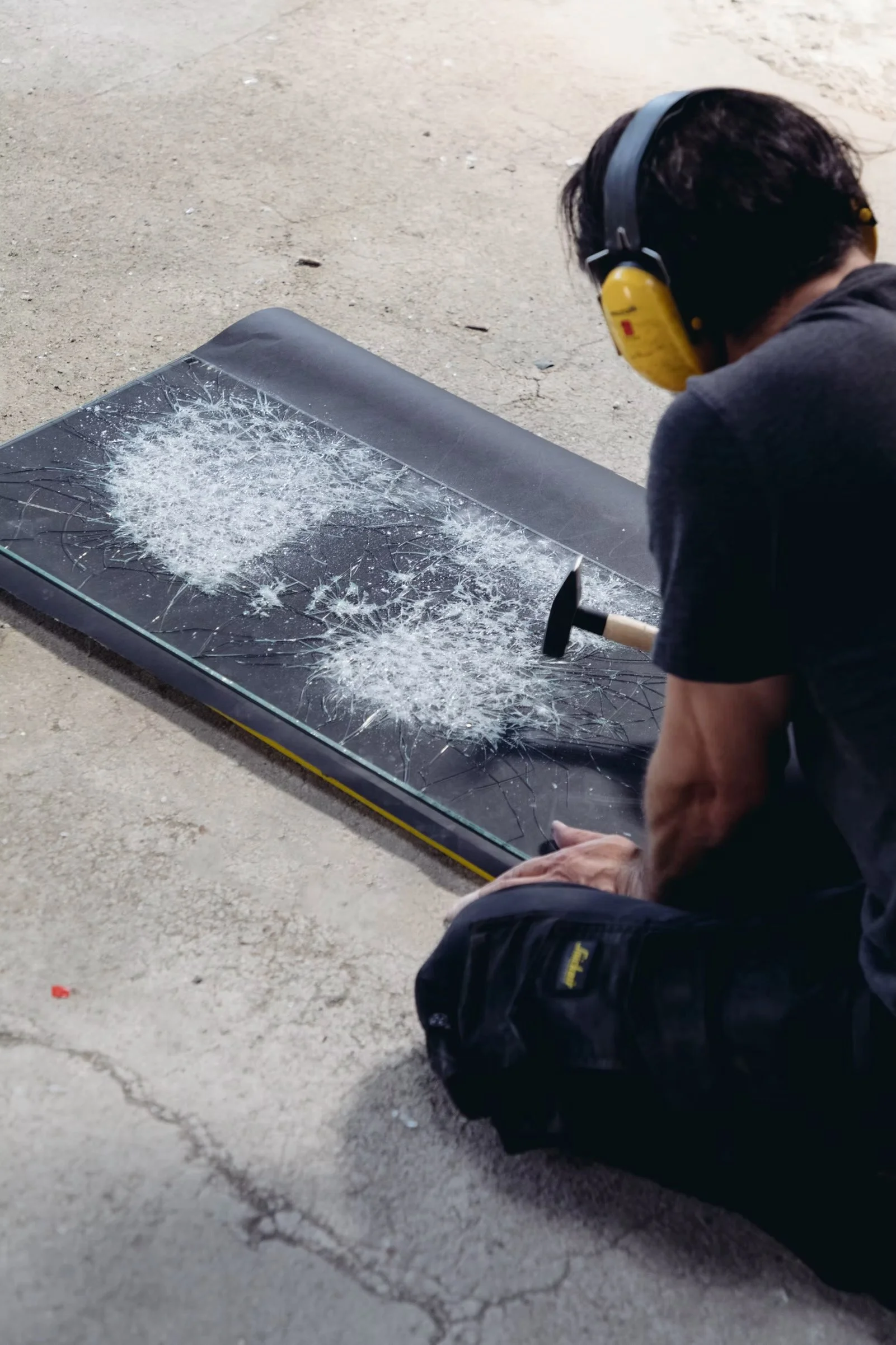
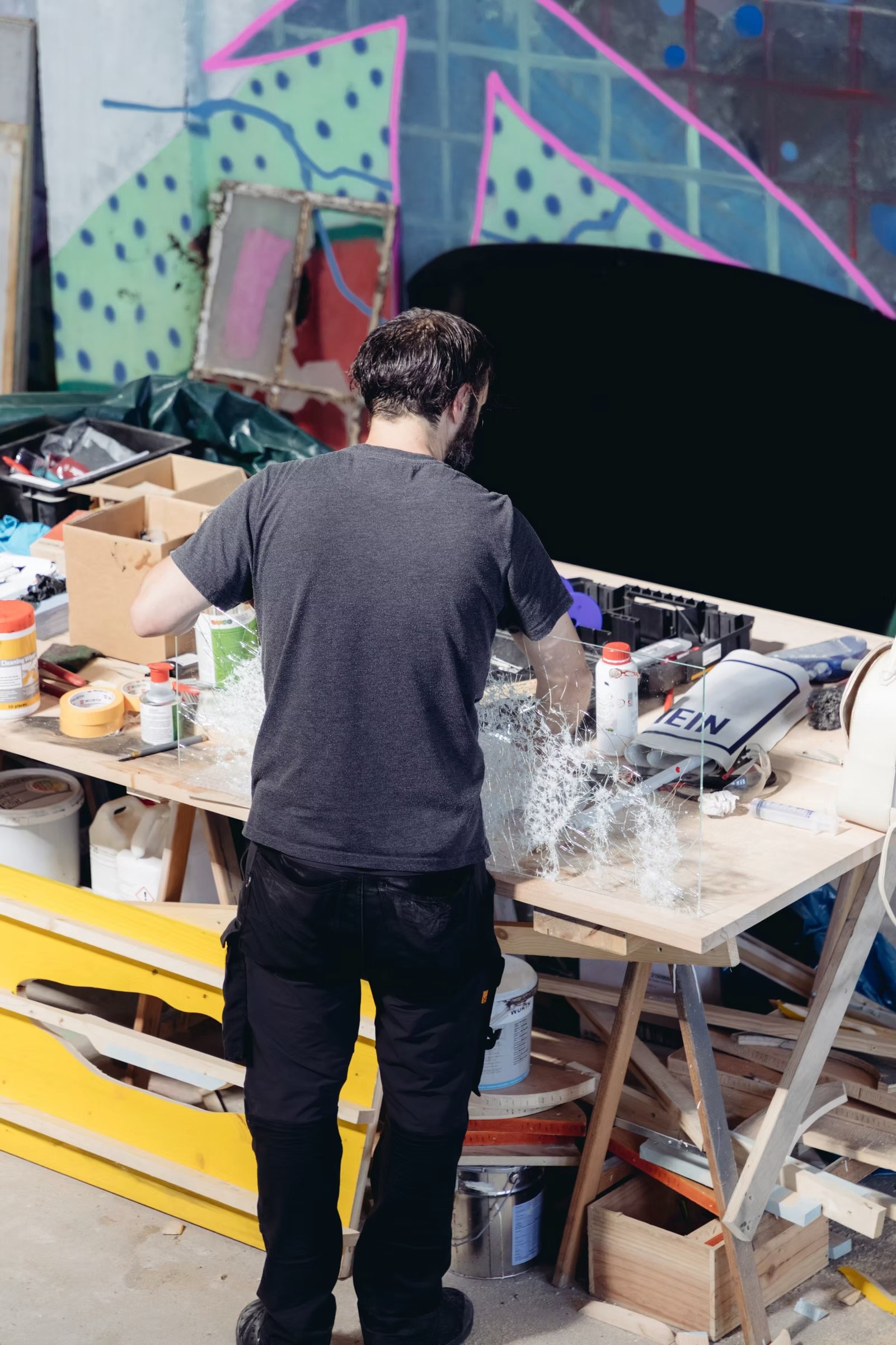
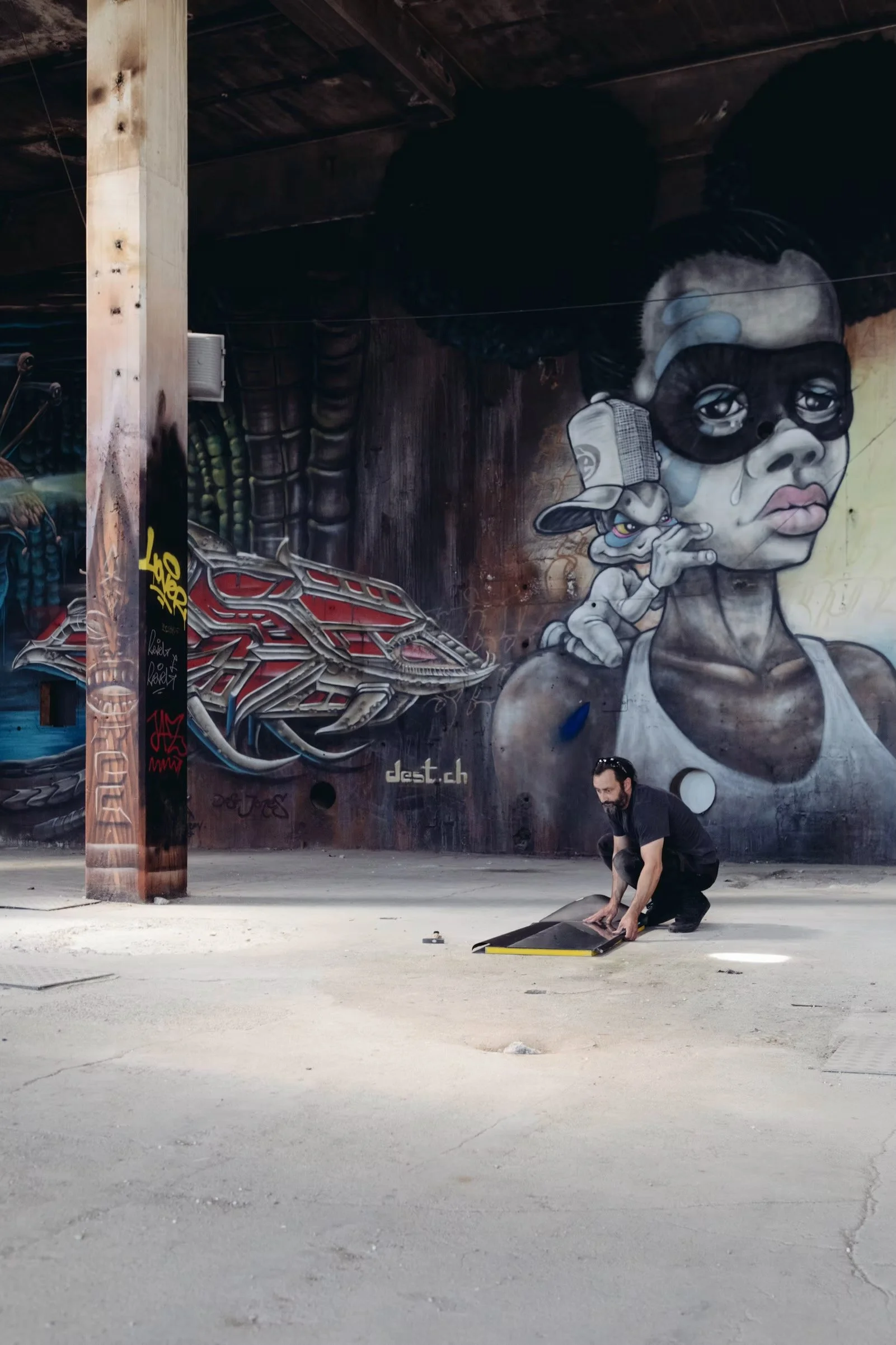
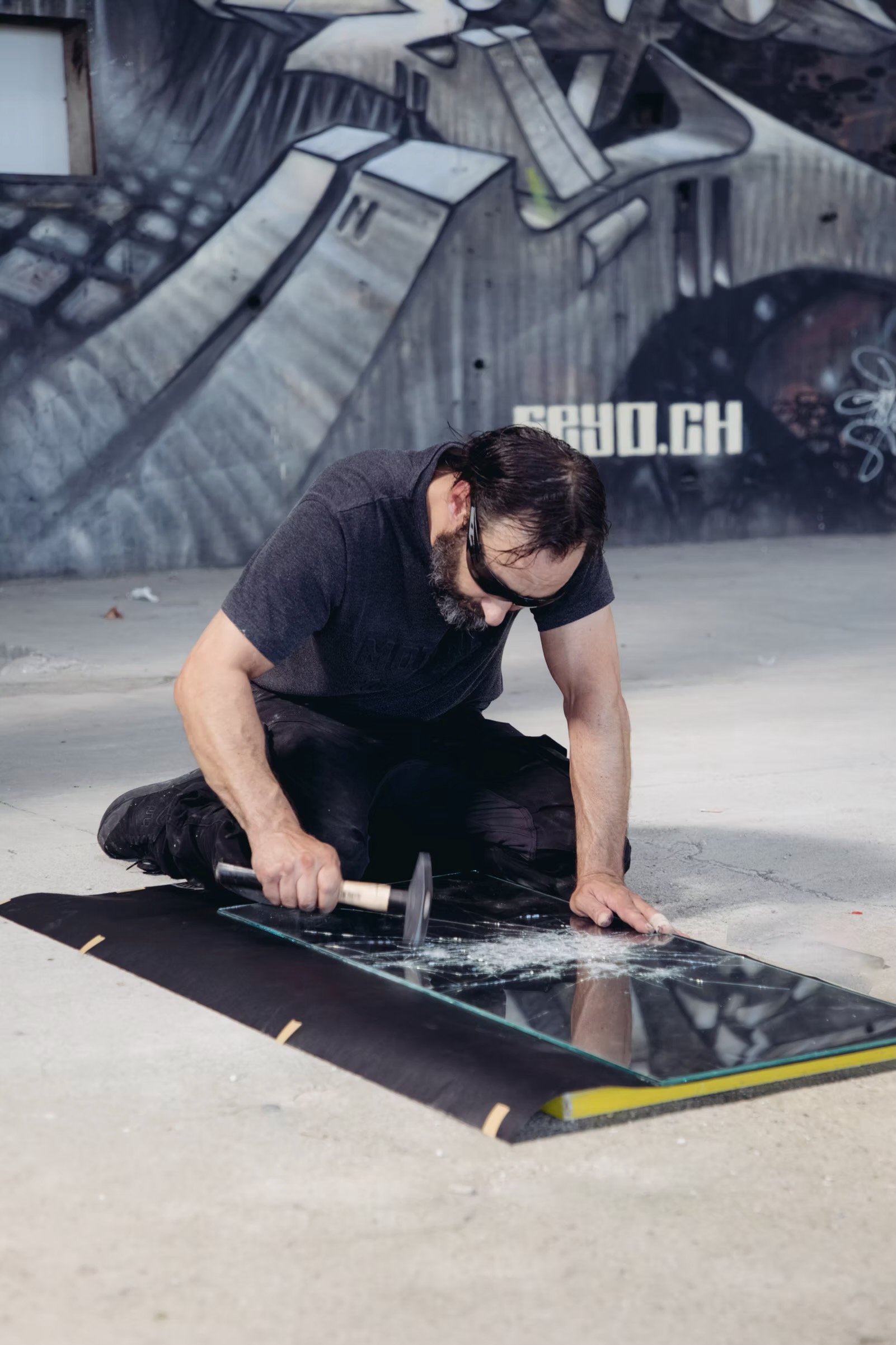
At the core of Berger's process are laminated safety glass and controlled impact.
Origins
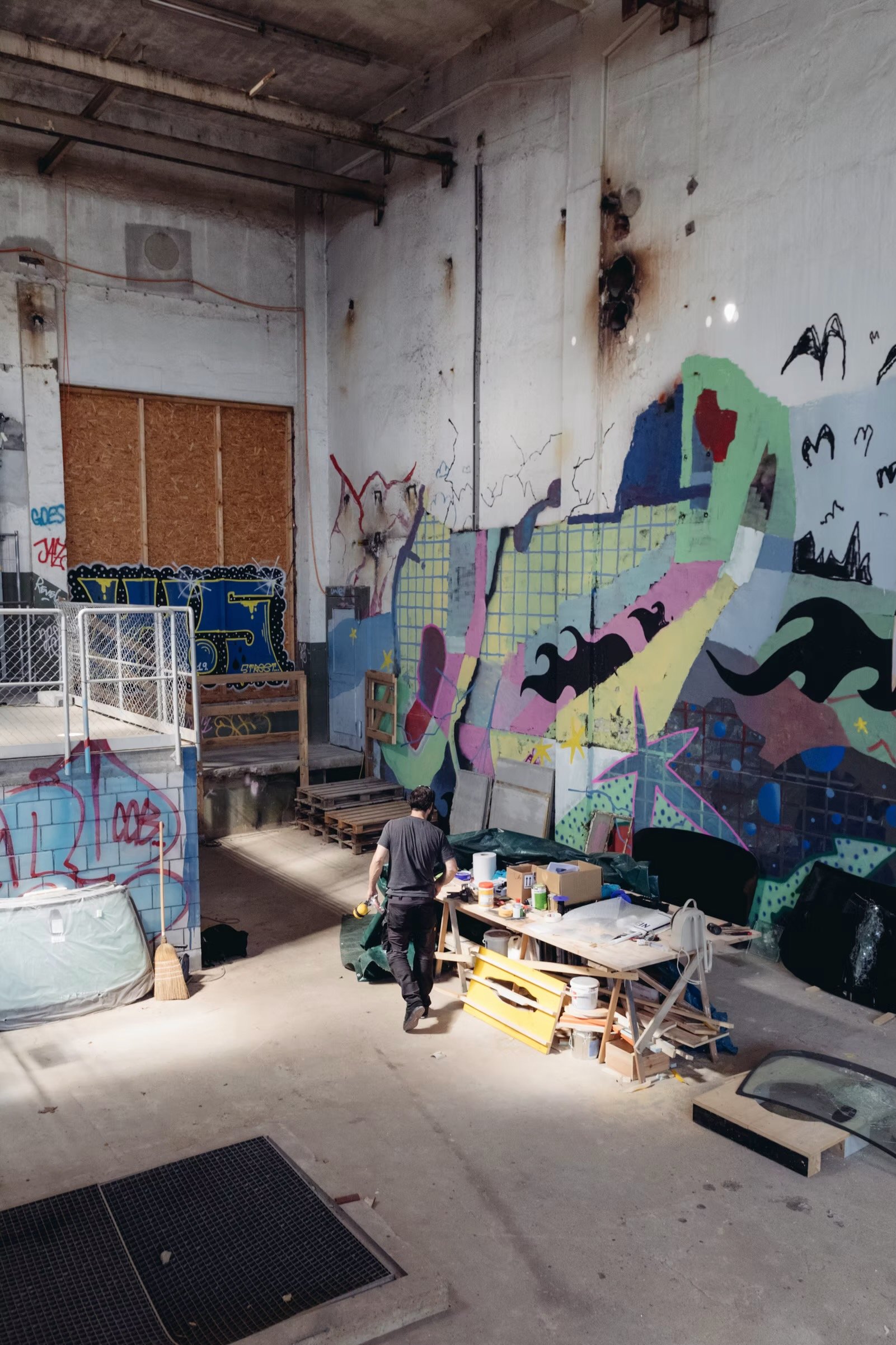
Berger began with portraits painted with spray cans. A carpenter by training, he made his first works in wood and later built assemblages from car bodies. In 2016, dissatisfied with his own work after an exhibition in Berlin, he looked for a new direction and remembered the cracks he had seen years earlier while installing conservatory glass. His first attempts on a car windscreen succeeded surprisingly quickly. From them emerged his technique of controlled impact.
01 — Impact
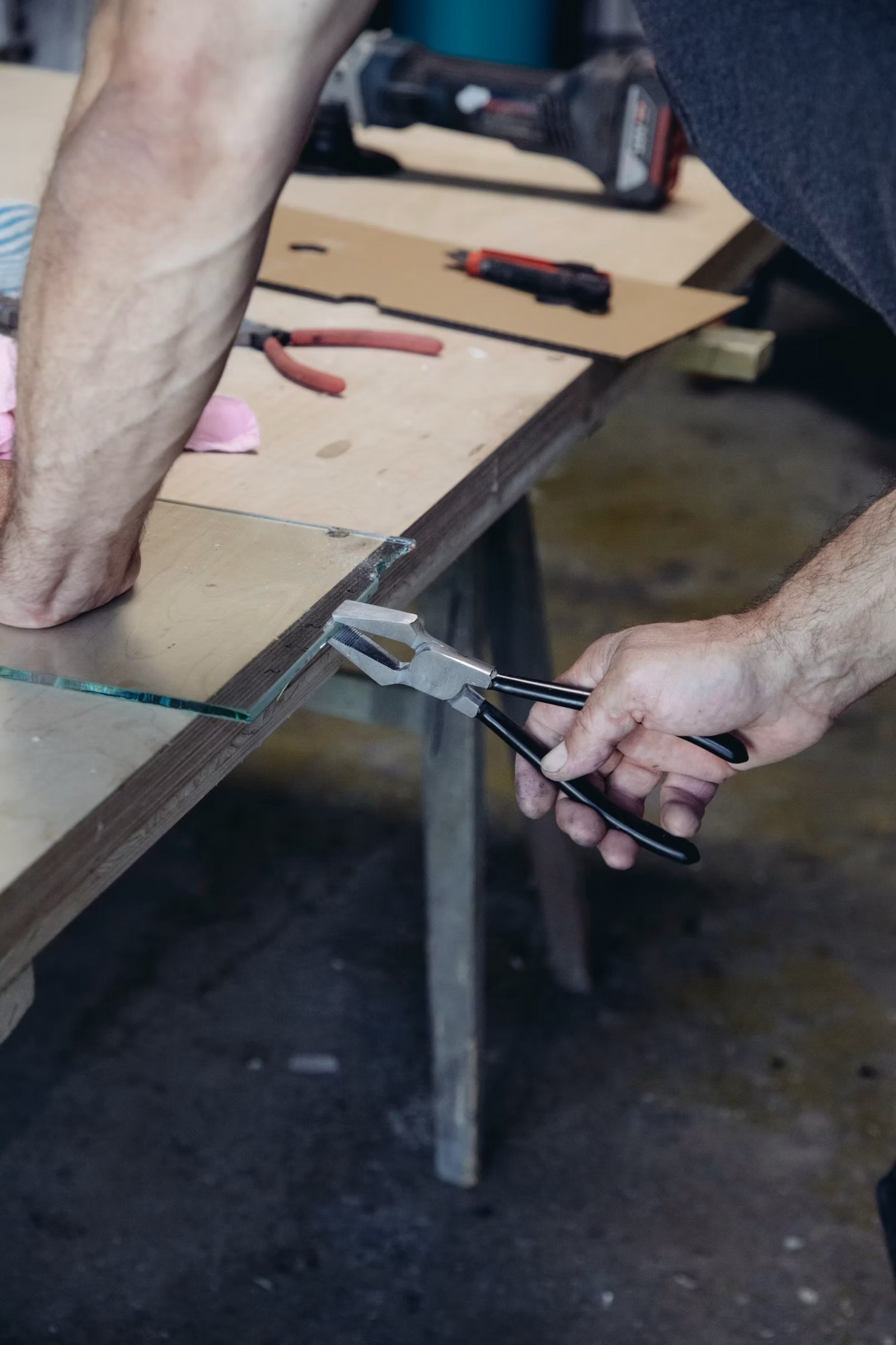
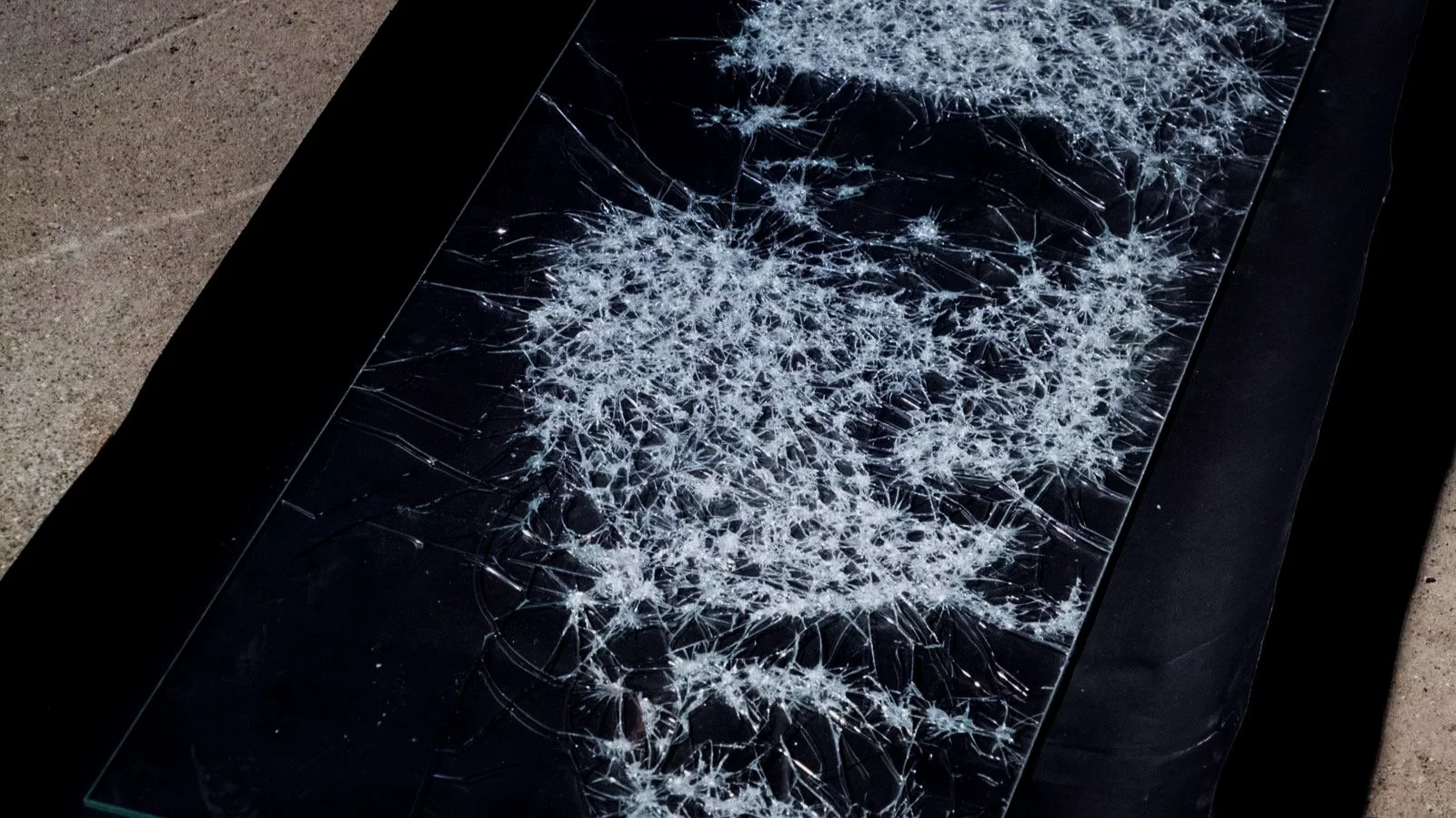
Each strike changes the material. Force, position and density decide how the fractures spread through the pane. Open areas keep the transparency of the glass; concentrated fractures catch the light and build the strongest tones. Laminated safety glass holds together as it cracks, so the image can grow blow by blow. Each decision becomes part of the final structure.
02 — Image
Up close, the work reads as impact points, radiating cracks and overlapping lines. As the viewer steps back, the fractures organise themselves into form: faces, gestures, figures. Berger builds tone through density.
03 — Light
Light changes the work. Glass reflects and transmits it, and the fractures catch it on their edges. Daylight, artificial light and the surrounding room produce different readings of the same piece, and the viewer's own movement becomes part of the experience.
04 — Space
Over the years, the glass has moved away from the wall. Works are layered, suspended, mirrored, tinted in the colours of a place, assembled into sculptural structures or integrated into architecture. At this scale, the work becomes something to approach, walk around and experience with the space.
05 — Live
In museums and cultural institutions, Berger creates works in front of an audience, blow by blow, until the image becomes visible in the glass — among them at the Fondation Pierre Gianadda in Martigny and, most recently, at the National Gallery of Bosnia and Herzegovina in Sarajevo. Live, the process shows the moment in which a field of fractures becomes an image.